In the early years of an apiary’s life, there is an undeniable rush that comes with a swarm call. The frantic hum of thousands of bees in the air, the sight of a massive cluster hanging from a low-hanging apple branch, and the adrenaline of shaking them into a nucleus box—it feels like winning the lottery. For a long time, I believed that every captured swarm was a gift from nature, a “free” colony that would bolster my numbers and my honey crop. I spent seasons dropping everything, rushing across town with a ladder and a bedsheet, convinced that volume was the ultimate metric of success.
However, experience is a stern teacher, and over fifteen years in the yard, I learned that the most expensive thing in beekeeping is often “free” bees. This realization didn’t come from a textbook; it came from the hard lessons of degraded genetics, compromised health, and the exhausting cycle of reactive management. Today, my approach has shifted from the pursuit of the swarm to the mastery of the split, prioritizing the integrity of the apiary over the number of hives on the stand.
The Hidden Cost of Genetic Volatility
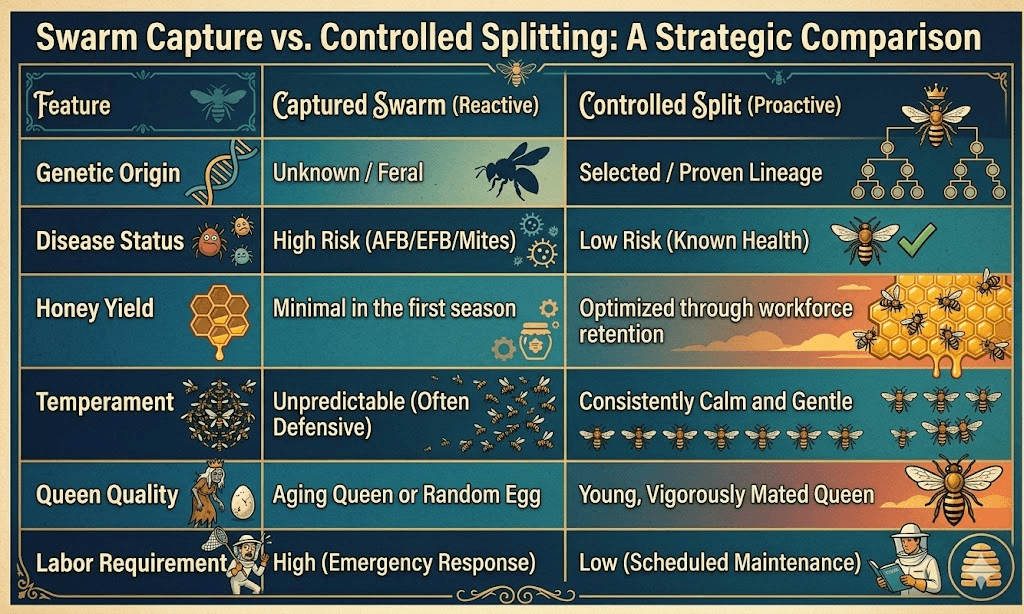
The primary issue with a feral or unknown swarm is the complete lack of genetic history. When a colony swarms in the wild, you are capturing a mystery. While some feral colonies possess remarkable survivor qualities, many others carry traits that are detrimental to a productive, manageable apiary. I recall a massive swarm I captured from an old barn; they were the most industrious builders I had ever seen, but within a month, their temperament turned. They became so defensive that I couldn’t walk within fifty feet of the hive without being chased.
A defensive colony doesn’t just make your work difficult; it changes the energy of the entire yard. It triggers defensive behavior in neighboring hives and makes every inspection a battle. By bringing in unknown genetics, I was gambling with the peace and productivity of my established colonies. I eventually realized that a single colony with a known, calm, and productive queen is worth ten swarms of unknown origin. In modern apiculture, we aren’t just keeping bees; we are managing genetics.
The Pathogen Vector and Biological Security
Beyond temperament, there is the invisible threat of disease. A swarm is a biological traveler, and it often carries “baggage.” While the act of swarming inherently reduces the Varroa mite load—since the mites stay with the brood left behind—it does nothing to protect against bacterial pathogens like American Foulbrood (AFB).
One of my most devastating seasons occurred after I introduced a seemingly healthy swarm into my main yard without a proper quarantine period. They carried a latent infection that slowly spread to my two strongest honey producers. By the time I identified the symptoms, the damage was done. I had to burn equipment that had taken me years to accumulate. That “free” swarm cost me hundreds of dollars and the loss of my finest stock. This was the turning point where I realized that biological security is more important than expansion. Now, if I do capture a swarm, they are treated like a patient in an isolation ward—far away from my primary colonies until they have proven their health through two full brood cycles.
Transitioning from Reactive to Proactive Management
The shift in my philosophy was a move from being a “swarm-chaser” to a “swarm-preventer.” Swarming is the natural reproductive impulse of a healthy colony, but for a beekeeper, it represents a failure of management. When a colony swarms, they take 50 to 60 percent of the workforce and the “old” queen with them, effectively ending your chances of a significant honey harvest for that season.
I began to look for the “voice” of the hive—the subtle cues that indicate a colony is feeling the pressure of success. It starts with the congestion of the brood nest and the backfilling of cells with nectar where eggs should be. If I am waiting to see queen cups on the bottom of the frames, I am already too late; the decision to leave has been made. Masterful management is about providing space three weeks before the bees think they need it. It is the art of staying ahead of the colony’s growth curve rather than chasing them once they’ve outgrown their home.
The Power of the Controlled Split
Instead of letting the bees decide when and where to reproduce, I took the initiative through the controlled split. This is the cornerstone of my current practice. By splitting a strong, healthy colony in early spring, I am fulfilling their biological need to reproduce while keeping both halves of the population under my care.
The beauty of a managed split is the ability to introduce superior genetics. Instead of letting the bees raise a “random” queen from an existing egg, I provide them with a mated queen from a lineage known for honey production, Varroa sensitive hygiene (VSH), and winter hardiness. This ensures that every new colony in my yard is an upgrade, not a gamble. It turns the expansion of the apiary into a calculated, strategic growth plan rather than a series of chaotic emergencies involving ladders and apple trees.
Quality Over Volume: The Sustainable Vision
If there is one thing I wish I could tell my younger self, it is that beekeeping is not a numbers game. Managing fifty mediocre hives is a chore; managing ten elite, high-performance colonies is a joy. The “sweetest lesson” was learning to value the quiet, steady progress of a well-managed yard over the loud, temporary excitement of a swarm.
At Foxats, our mission is built on this foundation of expertise. We prioritize the biological health and genetic integrity of the honeybee above all else. By stopping the chase and starting the management, we create an environment where both the bees and the beekeeper can thrive. It is a transition from being a spectator of nature to being a true partner in the life of the hive.
Implementing the Quarantine Yard Protocol
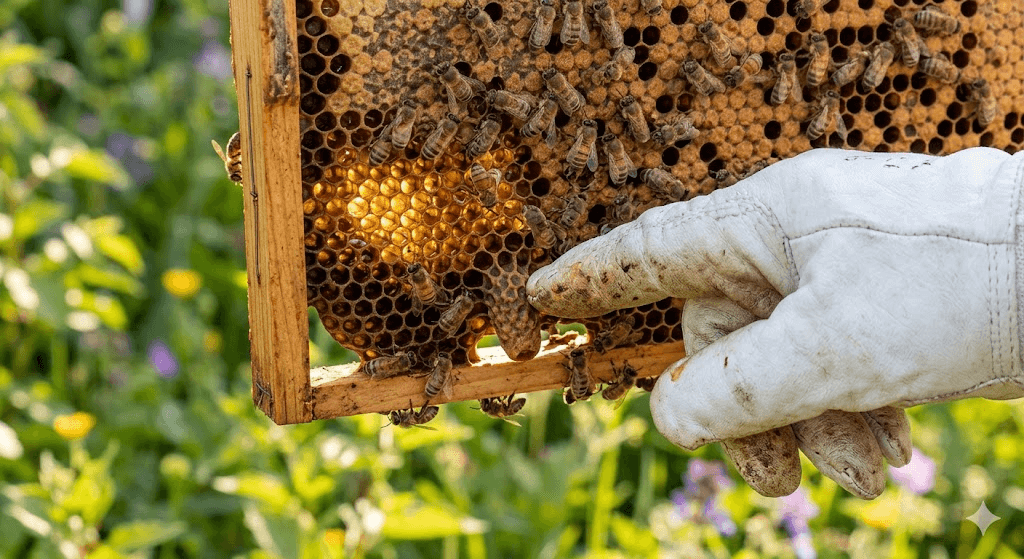
When the decision is made to accept a swarm—perhaps for the sake of local community relations or to preserve a particularly resilient local strain—the most critical step is the establishment of a “Hospital Yard.” This is a secondary location, ideally situated three to four miles away from the main apiary, where the new arrivals are isolated.
Biological security in an apiary is not unlike a laboratory setting. During this isolation period, which should last at least two full brood cycles (roughly six weeks), the swarm is monitored for clinical signs of foulbrood and heavy mite loads. It is during this window that I implement a mandatory re-queening protocol. By replacing the unknown queen with a mated queen from a certified breeder, I effectively “reset” the genetics of the colony while utilizing the raw labor force of the swarm to build out fresh wax foundation. This transformation turns a wild risk into a managed asset.
The Honey Calculus: Measuring the Cost of a Swarm
There is a common misconception that a swarm is “bonus bees,” but a deeper analysis of honey production reveals a different story. When a hive swarms in late May or early June, they are taking the most experienced foragers and the highest quality nectar-processing team with them. This happens exactly when the main nectar flow—be it clover, linden, or wildflower—is at its peak.
The economic loss of a single swarm can be quantified in lost honey production. A colony that is prevented from swarming through a controlled split or proactive space management can produce 60 to 100 pounds of surplus honey. In contrast, a parent colony that has just swarmed will spend the next four weeks simply trying to raise a new queen and rebuild its workforce, often resulting in zero surplus for the beekeeper. When you calculate the labor hours spent chasing the bees versus the market value of the lost honey, the “free” swarm becomes the most expensive event of the season.
Synchronizing Management with Floral Phenology
Expert hive management is less about the calendar and more about the landscape. The impulse to swarm is intimately tied to “floral phenology”—the timing of the first major nectar flows. In my practice, the dandelion bloom is the primary indicator of the “danger zone.” When the fields turn yellow, it signals a massive influx of carbohydrates into the hive, which triggers the queen to reach her peak laying capacity of 1,500 to 2,000 eggs per day.
By observing indicator plants like the blooming of fruit trees or the first willow catkins, I can predict the swarming window with high accuracy. Instead of waiting for the hive to become congested, I intervene when the bees are “thinking” about expansion. This synchronization allows me to perform splits exactly when the drones are available for mating and the weather is stable enough for queen flights. It is the transition from being a reactive observer to a proactive manager who works in harmony with the local ecosystem.