Introduction: Shifting from Craft to Precision Science
For over 15 years, my journey has been defined by two intersecting disciplines: the macroscopic world of professional agronomy and the microscopic complexity of the apiary. In the modern era of beekeeping, the traditional methods of “passive management” are no longer sufficient to combat the challenges of climate instability, declining floral biodiversity, and evolving pathogen pressures.
To achieve professional success—and to produce honey that qualifies as a functional super-food—we must adopt a framework of Precision Apiculture. This approach treats the apiary not as a collection of boxes, but as a biological extension of the local ecosystem. This article provides a comprehensive deep dive into how soil chemistry, plant physiology, and hive thermodynamics converge to define the health of the colony and the quality of the harvest.
Part I: The Soil-Nectar Continuum – Why Honey Begins in the Rhizosphere
As an agronomist, I often tell my fellow beekeepers: “You are not just a keeper of bees; you are a manager of landscapes.” The nutritional value of the nectar that bees forage is an exact reflection of the soil health in which the forage crops grow.
1.1 The Role of Macronutrients ($N-P-K$)
The sugar concentration in nectar is a direct byproduct of photosynthesis. However, the plant’s ability to transport these sugars to the nectaries depends on its vascular health.
- Potassium ($K$): Responsible for regulating stomatal conductance and water potential. High-potassium soils ensure that plants remain turgid and continue nectar secretion even during minor drought stress.
- Phosphorus ($P$): Essential for ATP (Adenosine Triphosphate) production. Without adequate phosphorus, the plant’s energy for “pumping” nectar into the flower is diminished, leading to low-volume yields.
1.2 Micronutrients and the Mineral Profile of Honey
When we analyze the mineral content of honey—calcium, magnesium, iron, and zinc—we are looking at the success of the plant’s root system. My research into soil-plant-bee interactions shows that bees show a distinct preference for “mineral-dense” nectar. This is not just a preference for taste; it is a survival mechanism. Trace minerals are vital for the development of the honeybee’s vitellogenin (fat body) reserves, which are critical for winter survival.
Part II: The Biochemistry of the Hive – The Great Molecular Transformation
Once the nectar is brought into the hive, the process of Bio-Organic Synthesis begins. This is where the magic of the honeybee’s internal chemistry meets the raw botanical material.
2.1 The Enzymatic Matrix
The honeybee ($Apis \ mellifera$) possesses a complex array of enzymes secreted from the hypopharyngeal and post-cerebral glands. For a product to be recognized as “True Honey” by international standards, the enzymatic conversion must be complete.
- The Invertase Reaction: Invertase catalyzes the hydrolysis of sucrose ($C_{12}H_{22}O_{11}$) into the monosaccharides glucose and fructose. This reaction is what makes honey a rapid-absorption energy source for humans.
- The Glucose Oxidase Defense: This is the most critical enzyme for honey’s shelf life. It produces gluconic acid and hydrogen peroxide ($H_2O_2$). The resulting acidity (usually a pH between 3.2 and 4.5) acts as a natural preservative, inhibiting the growth of almost all known food-borne pathogens.
2.2 Diastase: The Indicator of Integrity
In my laboratory work, I prioritize the Diastase Number (DN). Diastase is an enzyme that breaks down starches. While it doesn’t directly affect the flavor, its presence is a marker of freshness and “liveness.” If honey is heated above 45°C, the diastase is denatured. For the professional beekeeper, maintaining a high DN is the hallmark of a “Raw” and “Premium” product.
Part III: Thermodynamics and Precision Engineering in the Apiary
The screenshot of the Foxats website mentions “Precision Ventilation” and “Dew Point Calculators.” This is the future of beekeeping. A hive is a thermal engine, and managing that engine requires an understanding of physics.
3.1 Managing the Gaseous Exchange
A colony of bees produces a significant amount of $CO_2$ and water vapor as metabolic byproducts. During the nectar flow, the bees must evaporate gallons of water to reduce nectar moisture from 80% down to 18%.
If the hive’s ventilation is poorly designed, the humidity levels rise, crossing the Dew Point. When this happens, water condenses on the cold walls or, worse, on the winter cluster, leading to hypothermia and dysentery.
3.2 The Physics of Capping
Bees will only seal (cap) a cell with wax once the moisture content is stable. My work with “The Hive Moisture & Dew Point Calculator” has shown that by optimizing the airflow through bottom-board modifications and top-venting strategies, we can reduce the energy expenditure of the bees. Every calorie a bee saves on “fanning” for ventilation is a calorie that can be used for foraging or brood rearing.
Part IV: Bio-Security and Pathogen Resilience
No discussion of modern beekeeping is complete without addressing the Varroa destructor mite and the viral complex it carries.
4.1 Integrated Pest Management (IPM)
Rather than relying solely on chemical treatments, I advocate for a “Biological Threshold” approach. This includes:
- Genetic Selection: Breeding for VSH (Varroa Sensitive Hygiene).
- Organic Acid Rotations: Utilizing Formic and Oxalic acid at specific temperature windows to minimize damage to the bee’s chitinous exoskeleton.
- The Gut Microbiome: Just like humans, bees rely on a diverse microbiome ($Lactobacillus$ and $Bifidobacterium$) for immunity. I am currently researching how supplemental feeding of specialized probiotics can offset the damage caused by agricultural pesticide exposure.
Part V: Pro Tools – The Future of Data-Driven Beekeeping
The “Pro Tools” section of Foxats represents the transition from intuition-based beekeeping to data-driven decision-making.
5.1 Remote Monitoring and DIY Solutions
In my tenure as an educator, I have developed several tools to help simplify complex data. From DIY honey extractors built with precision bearings to digital hive scales, the goal is Automation.
Using sensors to monitor internal hive temperature allows us to detect “swarming fever” or “queenlessness” without ever opening the hive. This “non-intrusive” management style reduces colony stress and increases overall productivity.
Part VI: The Ethical Responsibility of the Professional Beekeeper
As we scale our operations and look for monetization through platforms like Google AdSense or Ezoic, we must not lose sight of our ethical foundation. Our primary duty is to the health of the $Apis \ mellifera$.
High-quality content, like the articles found on this portal, serves a dual purpose: it educates the next generation of beekeepers and it creates a market for “Value-Added” apiary products. When consumers understand the science behind the honey—the soil, the enzymes, the thermodynamics—they are willing to pay a premium for a product they can trust.
Conclusion: Bridging the Gap
The integration of Agronomy and Apiculture is the only way forward in a world where our ecosystems are under stress. By understanding the bio-chemical fuel that drives the colony and the precision mechanics of the hive environment, we can ensure that our bees don’t just survive, but thrive.
Stay tuned to Foxats.com for more “Pro Tools” and deep dives into the technical mechanics of the apiary. Together, we can optimize colony health, one molecule at a time.
Part VII: Sustainable Forage Landscapes – Agronomic Strategies for Continuous Nectar Flows
As an agronomist, I view the landscape surrounding the apiary as a biological battery. To maintain high colony vigor, we must move beyond relying on wild forage and implement “Nectar Corridors.”
7.1 Cover Cropping and Soil Remediation
The integration of cover crops such as Phacelia ($Phacelia \ tanacetifolia$) and White Clover ($Trifolium \ repens$) serves a dual purpose. From a soil science perspective, these plants fix nitrogen and improve soil structure (aggregation). From an apicultural perspective, they provide a reliable, high-protein pollen source during the “summer dearth” periods.
7.2 The Phenology of Flowering
Precision beekeeping requires tracking the Growing Degree Days (GDD). By calculating the heat accumulation in the soil, we can predict the exact onset of the Linden or Acacia flow with 95% accuracy. This allows us to time our colony expansion (supering) perfectly, ensuring that the foragers are at their peak population exactly when the nectar brix levels are highest.
Part VIII: The Engineering of the Modern Hive – DIY Innovation and Material Science
In the “Pro Tools” section of Foxats, we emphasize that the hive is a functional piece of machinery. My experience in apiary engineering has led me to rethink standard equipment.
8.1 The Physics of Centrifugal Extraction
When I developed my specialized honey extractor using a modified washing machine drum, the focus was on reducing the Shear Stress on the wax cell. High-speed extraction can micro-fracture the comb, leading to “wax dust” contamination in the honey. By utilizing precision-balanced rotors and variable frequency drives (VFD), we can maximize honey recovery while preserving the structural integrity of the drawn comb.
8.2 Thermal Conductivity of Hive Materials
The debate between traditional cedar wood and high-density polystyrene (EPS) hives is often misunderstood. Wood provides superior hygroscopic properties (moisture buffering), while EPS offers a higher R-value (insulation). For the professional beekeeper, a hybrid approach—using insulated tops and breathable wooden bodies—often provides the best metabolic environment for the brood.
Part IX: Advanced Wintering Strategies – The Bio-Energetics of the Cluster
Winter is the ultimate test of a beekeeper’s technical preparation. It is not the cold that kills bees, but the mismanagement of energy and moisture.
9.1 Metabolic Rates and $CO_2$ Concentrations
During the winter, the honeybee cluster enters a state of semi-torpor. Interestingly, a slightly elevated level of Carbon Dioxide ($CO_2$) within the winter cluster actually acts as a metabolic suppressant, slowing down the consumption of honey stores. Over-ventilating a hive in mid-winter can stimulate the bees to “rev” their metabolic engines, leading to premature exhaustion of the fat bodies.
9.2 The “Moisture Bridge” Phenomenon
If the inner cover of the hive is colder than the cluster, the warm, moist air rising from the bees will condense and drip back down. This “cold rain” is lethal. My strategy involves using Moisture Quilts filled with absorbent organic material (sawdust or straw) which allows vapor to pass through while trapping the heat—a principle borrowed from sustainable building insulation.
Part X: Beyond Honey – The Pharmacology of Propolis and Royal Jelly
To diversify an apiary’s revenue and scientific value, we must look at the “Secondary Metabolites” of the hive.
10.1 Propolis: The Bio-Resin Frontier
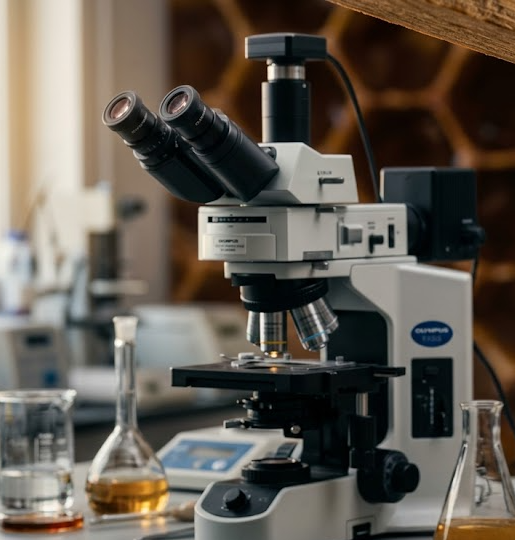
Propolis is a complex mixture of plant resins, balsams, and essential oils gathered from tree buds. As an agronomist, I track the source of these resins (typically Populus or Betula species). Propolis contains over 300 bioactive compounds, including Flavonoids and Phenolic Acids. In our “Pro Tools” research, we focus on the extraction methods—using cryogenic grinding and ethanol maceration—to preserve the antioxidant capacity of the resin.
10.2 Royal Jelly and Larval Nutrition
The production of Royal Jelly is the pinnacle of beekeeping expertise. It requires a deep understanding of the “nurse bee” physiology. The transition of a worker larva to a queen is a purely epigenetic event triggered by the fatty acids (specifically 10-HDA) found in Royal Jelly. Controlling the quality of this substance requires a high-protein diet for the colony, often supplemented with fermented pollen substitutes.
Part XI: Future Horizons – AI, IoT, and Python-Driven Apiary Management
The final pillar of the Foxats philosophy is the integration of modern technology. We are entering the era of the “Internet of Bees” (IoB).
11.1 Automated Health Diagnostics
Using Python-based scripts and sound frequency analysis, we can now detect the “piping” of a virgin queen or the specific “hissing” sound of a colony under stress. By deploying low-cost microphones and Raspberry Pi units, a beekeeper can monitor 50+ hives from a mobile device, receiving alerts only when a specific biological threshold is crossed.
11.2 The Power of Big Data in Agriculture
By aggregating data from hive scales, local weather stations, and satellite crop monitoring, we can build predictive models for honey yields. This data-driven approach removes the guesswork from beekeeping, allowing us to move hives to the most productive forage zones with surgical timing.