The presence of Varroa destructor in a honeybee colony is no longer a question of “if,” but a matter of “when” and “how much.” For the modern apiculturist, managing these parasitic mites is the single most important factor in determining the long-term survival of the apiary. However, the days of calendar-based chemical applications are over. Today, sustainable hive management requires a sophisticated strategy known as Integrated Pest Management (IPM). This approach prioritizes biological and mechanical controls, utilizing chemical interventions only as a last resort when specific economic thresholds are met.
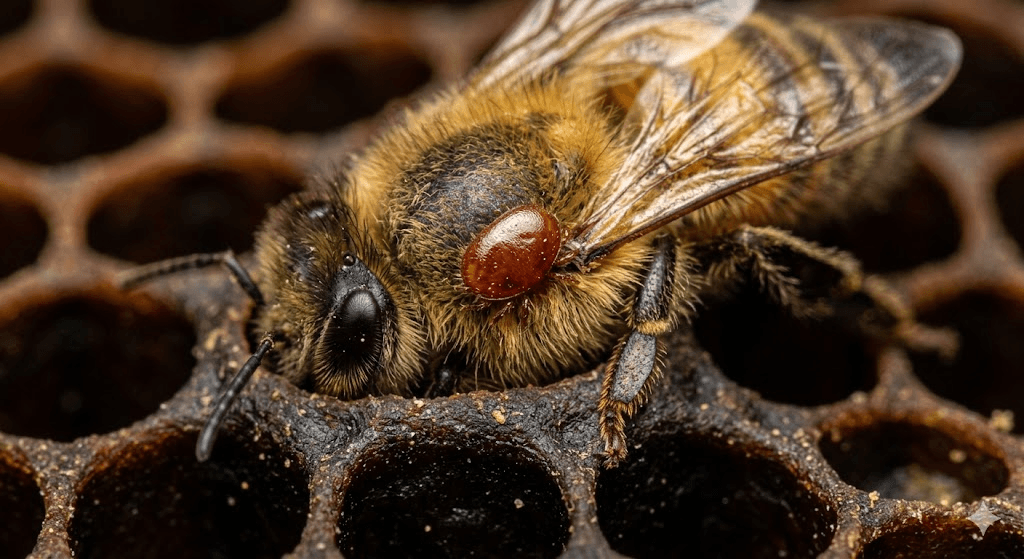
Understanding the biology of the mite is as critical as understanding the biology of the bee. Varroa mites do not just feed on the fat bodies of bees; they serve as a vector for at least 18 different viruses, including Deformed Wing Virus (DWV). A hive that looks strong in July can collapse by October if the viral load becomes insurmountable.
The Precision of Monitoring: Data Over Guesswork
The foundation of an IPM strategy is accurate monitoring. Guessing the mite load based on the visual appearance of the bees is a dangerous practice, as 80% of the mite population is typically hidden inside capped brood cells. To manage a hive professionally, the beekeeper must utilize standardized sampling methods to determine the “mites per hundred” (Meters) ratio.
The alcohol wash remains the gold standard for accuracy. By sampling approximately 300 bees (half a cup) from the brood nest and washing them in 70% isopropyl alcohol, the beekeeper can achieve a 95% accuracy rate in mite detection. While the powdered sugar shake is a popular non-lethal alternative, research consistently shows it can undercount mites by as much as 20%, potentially leading to a false sense of security. At Foxats, we advocate for the precision of the alcohol wash, especially in mid-summer when the colony’s future hangs in the balance.
Mechanical Controls and Cultural Management
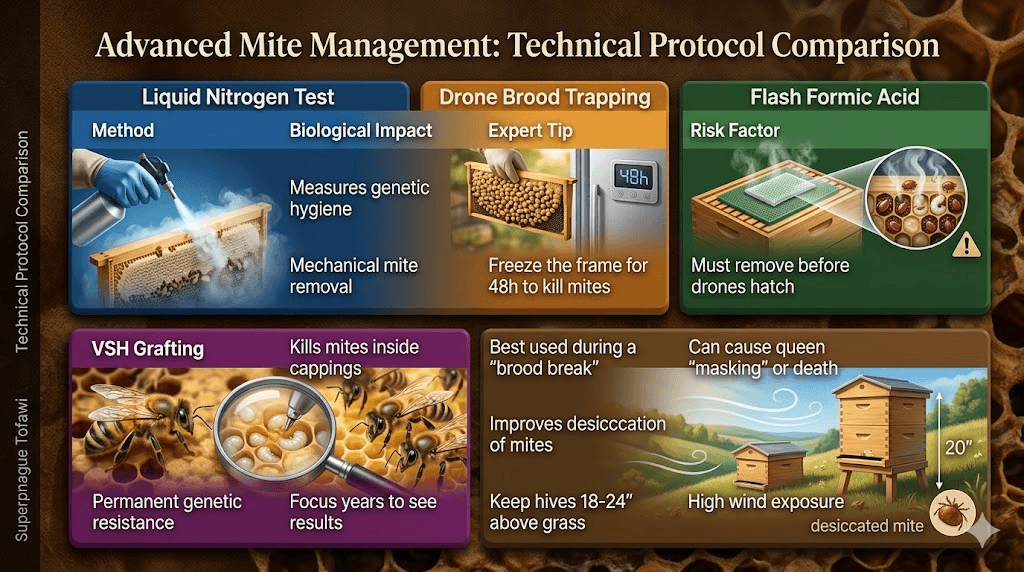
Before reaching for a chemical treatment, the IPM framework encourages mechanical interventions that disrupt the mite’s reproductive cycle. One of the most effective methods is drone brood removal. Varroa mites prefer drone brood over worker brood by a factor of eight to ten because of the longer capping period, which allows for more mite offspring to reach maturity.
By introducing a dedicated drone frame and removing it once it is capped, a beekeeper can physically remove a significant portion of the mite population from the hive without any chemical input. Combined with the use of screened bottom boards, which prevent mites that fall off bees from re-entering the cluster, these mechanical steps can keep the mite population below the treatment threshold for much longer than wooden-floor hives.
Seasonal Chemical Rotation and Temperature Sensitivity
When the mite count exceeds the threshold—typically 2-3% in the spring or summer—chemical intervention becomes a biological necessity. However, the professional beekeeper must understand the pharmacology of the treatments. Rotating different classes of miticides is essential to prevent the development of resistance, a phenomenon that has already rendered some older synthetic chemicals nearly useless.
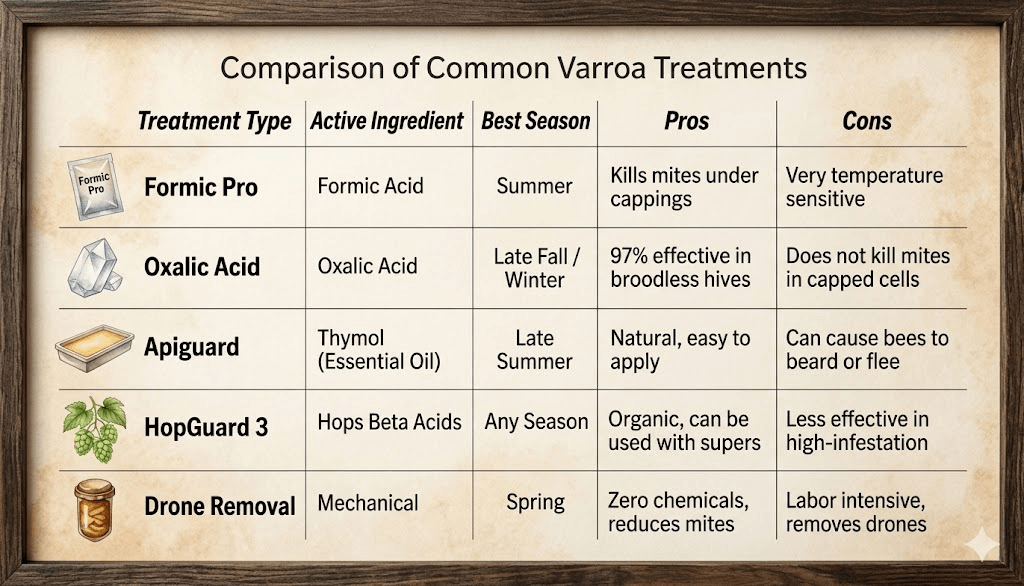
Organic acids, such as Formic Acid and Oxalic Acid, are the cornerstones of modern mite management. Formic acid is unique because it can penetrate the wax cappings to kill mites inside the brood cells, making it a powerful tool during the peak of the season. However, it is extremely temperature-sensitive; applying it when temperatures exceed 30°C (85°F) can lead to significant bee mortality or queen loss. Understanding these environmental variables is the hallmark of an expert manager.
The Role of Oxalic Acid in the Broodless Period
Oxalic Acid (OA) has revolutionized winter and early spring management. Unlike formic acid, OA does not penetrate cappings, meaning it is most effective during “broodless” windows—either in late autumn after the first hard frost or in early spring before the queen begins her peak laying cycle.
The method of application—whether through vaporization or the “dribble” method—must be executed with precision. Vaporization (sublimation) is highly favored in professional circles because it requires no opening of the hive in cold weather and causes minimal disruption to the winter cluster. When used correctly during a broodless window, Oxalic Acid can achieve a 97% kill rate, ensuring the bees begin the new season with a nearly zero mite load.
Genetic Resilience and VSH Breeding
The long-term vision for any sustainable apiary is the transition toward Varroa Sensitive Hygiene (VSH) genetics. This is a behavioral trait where bees can detect, uncap, and remove mite-infested brood. While we currently rely on IPM protocols and organic treatments, the goal is to support and breed from colonies that demonstrate natural resistance.
Investing in queens with proven VSH traits reduces the frequency of chemical interventions and fosters a more resilient biological system. At Foxats, we believe that the future of beekeeping lies in this marriage of rigorous scientific monitoring and the promotion of natural, hygienic bee behavior. By focusing on the health of the colony at a genetic and biological level, we ensure that our apiaries remain productive and vibrant for decades to come.
The Viral Hangover: Why Mite-Free Hives Still Die in Winter
A common frustration in professional apiculture is the “Winter Collapse” of a colony that was successfully treated for mites in the autumn. To understand this, one must grasp the concept of the viral load lag. Even when an alcohol wash shows a 0% mite infestation after treatment, the viruses the mites introduced—specifically Deformed Wing Virus (DWV) and Acute Bee Paralysis Virus (ABPV)—persist within the biological tissue of the bees.
The secret to winter survival isn’t just killing the mites; it is ensuring the “Winter Bee” generation (the diutinus bees) is raised in a low-virus environment. If the treatment is applied too late—for example, in late September—the bees that are meant to live for six months have already been “scarred” by mites during their larval stage. Their immune systems are compromised, and their fat bodies, which store essential proteins for winter, are depleted. My experience has taught me that August 15th is the critical deadline for heavy mite intervention in temperate climates. Any treatment after this date is often a rescue mission rather than a management strategy.
The “Pin-Prick” Test: Quantifying Hygienic Behavior
If you want to move your apiary toward long-term sustainability, you must stop treating every hive as an equal and start selecting for genetics. One of the most unique, expert-level methods to assess a colony’s potential for Varroa resistance is the Hygienic Behavior Test, often called the “Pin-Prick” or “Liquid Nitrogen” test.
This involves killing a small, specific area of capped brood (usually a 2×2 inch square) and measuring how quickly the house bees identify the dead larvae, uncap them, and remove them.
- Elite Colonies: Will clean 95% or more of the dead brood within 24 hours.
- Average Colonies: May take 48 hours or longer. Colonies that score high on this test are showing a superior ability to detect diseased or parasitized brood—including those infested with Varroa. Instead of just buying new queens, the expert beekeeper uses this data to graft larvae from the most hygienic colonies, effectively “teaching” the apiary how to defend itself over several generations.
Micro-Climate Engineering: Solar Exposure and Mite Desiccation
There is a fascinating, often overlooked link between the physical placement of the hive and the reproductive success of the Varroa mite. Mites thrive in the high-humidity, stable-temperature environment of the brood nest. However, they are sensitive to desiccation and extreme temperature fluctuations.
I have observed that hives placed in full morning sun, with their entrances facing Southeast, tend to have lower early-season mite buildups than those kept in the shade. The increased solar radiation encourages earlier flight activity and slightly raises the internal temperature of the outer frames, which can disrupt the mite’s sensitive reproductive cycle. Furthermore, elevating the hives at least 18 inches off the ground improves vertical airflow. When combined with a screened bottom board, this “environmental IPM” creates a micro-climate that is less hospitable for the parasite while remaining optimal for the bees.
The Ethics of “The Soft Kill”: Choosing the Right Molecule
In the professional world, there is a heated debate between synthetic “hard” chemicals and organic “soft” acids. While synthetic miticides are easy to apply and highly effective, their lipophilic nature means they accumulate in the wax foundation, creating a toxic legacy that can affect drone fertility and queen longevity for years.
The expert choice is almost always the “Soft Kill”—using molecules like Formic and Oxalic acid that occur naturally in honey and the environment. However, the “trick” to using these effectively is understanding the Vapor Pressure. For instance, when using Thymol-based treatments, the efficacy is entirely dependent on the bees’ fanning behavior. If the hive is too heavily ventilated, the vapor escapes before it can affect the mites. If it is too closed, the concentration becomes toxic to the bees. Mastering the “sweet spot” of hive ventilation during treatment is what separates a master from a novice.
Don’t miss the new topic we’ve covered in detail Spring Hive Inspection: A Comprehensive Guide to Early Season Management