Introduction: In the high-performance apiary, managing the gaseous exchange is as critical as managing varroa levels. As an agronomist with 15 years of experience in plant and soil science, I view the beehive not just as a box, but as a complex thermodynamic system. Every winter, a colony consumes honey, producing metabolic water as a byproduct. Without precise engineering, this water transforms into the “cold rain” of condensation, which is a leading cause of winter mortality.
Moisture Management in the Modern Hive
The primary challenge of overwintering Apis mellifera is balancing thermal retention with moisture evacuation. When warm, moisture-laden air from the bee cluster hits a surface colder than the Dew Point, it liquefies. My research into hybrid hives and XPS insulation has shown that by shifting the temperature gradient within the hive walls, we can prevent internal condensation entirely.
The Foxats Ventilation & Dew Point Calibrator
To eliminate guesswork, I have developed this tool. It allows you to input your ambient (outside) temperature and the internal cluster temperature to determine the risk of condensation on your inner cover or walls.
Moisture Dynamics Calibrator
Calculated Dew Point: 23.1°C
Engineering the Thermodynamic Buffer
From my experience, the use of XPS foam (as discussed in my “Thermal Envelope” article) acts as a thermal break. When we understand the dew point, we can engineer the “Cold Pocket” of the hive—a specific area (usually the lower back corner) where we want condensation to occur, so it can be drained away without chilling the bees. This is not just beekeeping; it is precision environmental control.
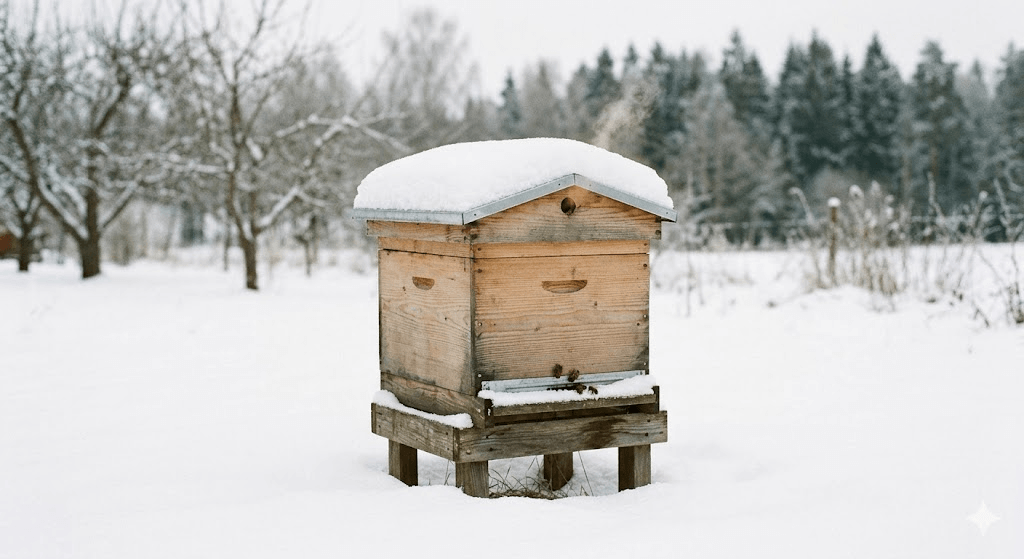
The Physics of Convection: Balancing Hive Ventilation and Dew Point
In my 15 years of agronomical practice, I have observed that managing a beehive’s internal atmosphere is nearly identical to managing the microclimate in industrial greenhouses. The movement of air within the hive is driven by natural convection—a process where the heat generated by the winter cluster creates a “chimney effect.” However, a critical error many beekeepers make is failing to distinguish between ventilation (the necessary exchange of gases) and drafts (uncontrolled, high-velocity airflow that strips heat).
When air moves too quickly or unpredictably, the bees are forced to increase their metabolic rate to maintain the core temperature of the cluster. This inevitably leads to higher honey consumption and, paradoxically, the production of even more metabolic moisture as a byproduct of respiration. My research into hive thermodynamics suggests that the ideal airflow must be laminar and slow. By calculating the “Scrubbing Effect” of the air, we can determine the exact volume of air required to carry away one gram of water vapor without stripping the cluster of its vital thermal energy. This is what I call Precision Atmospheric Tuning. In a hybrid hive system, we utilize the density of cold air to “push” the moist, warm air toward specific exit points, ensuring that the moisture is sequestered and removed before it has a chance to reach the saturation point and trigger a condensation event.
Material Science in Apiculture: Preventing Humidity Saturation and Maintaining the Dew Point
As an agronomist, I frequently analyze soil porosity and its water-retention capacity; the same principles of material science apply to the structures we choose for our apiaries. Traditional wooden hives are hygroscopic—they actively absorb moisture from the internal environment. While this may seem like a benefit for humidity control, in the depth of winter, a saturated wooden wall loses its R-value (thermal resistance) almost entirely. A wet board becomes a thermal bridge that accelerates heat loss and shifts the Dew Point directly onto the internal surface of the hive wall, creating a “wet wall” effect.
In contrast, my Thermal Envelope design utilizes high-density XPS (Extruded Polystyrene). XPS is non-porous and hydrophobic. Because it does not absorb water, its thermal resistance remains constant regardless of the humidity levels inside the hive. When we combine a wooden frame with a high-performance XPS layer, we create a Thermodynamic Buffer. In this configuration, the internal surface temperature of the hive wall stays above the dew point even during extreme external temperature drops. Engineering the hive this way ensures that the only place where condensation can occur is in a designated “Cold Sump” at the bottom of the hive, where moisture can drain away without chilling the bees. This is the difference between accidental beekeeping and engineering for survival.
Practical Retrofitting: Advanced Hive Ventilation & Dew Point Control
Transitioning from standard equipment to a high-performance system does not always require a total overhaul of your apiary. It requires a shift in how you manage the “headspace” of the colony to control the Vapor Pressure Deficit (VPD). Based on my technical experience, the most effective retrofit involves installing a Top-Entry Ventilation Shim paired with a precision-calculated insulation stack.
To implement this correctly, I recommend a tiered insulation approach: ultra-high-density insulation directly above the cluster to keep the “ceiling” at maximum temperature, combined with a perimeter airflow gap. This forces moisture-laden air to move laterally toward the walls rather than rising and dripping back down as “cold rain.” Furthermore, using a restricted bottom entrance for fresh air intake, combined with a calibrated top exit, creates a controlled pressure environment. This setup allows the bees to regulate their own microclimate with minimal energy expenditure. By applying these agronomical and engineering principles, we transform the hive from a simple wooden box into a sophisticated, self-regulating biological incubator capable of withstanding the harshest winters.
Digital Surveillance: Leveraging IoT Sensors for Real-Time Dew Point Tracking
In the modern “Smart Apiary,” we no longer rely on guesswork or occasional visual inspections. As a developer and agronomist, I advocate for the integration of precision sensors to monitor the internal hive environment. By deploying low-power microcontrollers (such as ESP32 or ESP8266) equipped with calibrated BME280 or DHT22 sensors, we can capture real-time data on temperature ($T$) and relative humidity ($RH$).
The true value of this data lies in calculating the Vapor Pressure Deficit (VPD) and the Dew Point programmatically. By running a simple Python-based automation script, the system can alert the beekeeper when the internal wall temperature approaches the calculated dew point. This “Early Warning System” allows for proactive adjustments to the ventilation shims or insulation layers. Moving from reactive to predictive hive management is the hallmark of the professional beekeeper. On my platform, I treat the hive as a biological server—one that requires constant uptime and optimal environmental parameters to function at peak efficiency.
The Metabolic Cost of Humidity: Why “Dry” Does Not Mean “Desert”
While the focus of this article has been on preventing condensation, it is critical to understand the biological nuance of moisture. Bees require a specific amount of ambient humidity to prevent the drying of the open brood (larvae) and to facilitate the dilution of crystallized honey. However, there is a steep metabolic cost to managing excess water vapor.
When the hive’s internal humidity exceeds 85%, the bees’ ability to evaporate water from their own respiratory systems is hindered. This leads to physiological stress and an increased susceptibility to fungal pathogens like Nosema. From an engineering standpoint, we are looking for the “Goldilocks Zone”—a humidity range of 50% to 70%. In this range, the air is dry enough to prevent “cold rain” condensation on the inner cover, yet moist enough for the bees to maintain their biological functions without excessive water foraging. By mastering the Thermodynamic Buffer, we provide the colony with a stable environment where they can focus their energy on heat production rather than moisture regulation.
Conclusion: Engineering the Future of Apis Mellifera
Overwintering is not a test of luck; it is a test of physics. By applying agronomical principles of soil and moisture management to the beehive, and by utilizing modern materials like XPS alongside digital monitoring, we can virtually eliminate winter losses caused by moisture. The Foxats Chronology Matrix and the Dew Point Calibrator are more than just tools—they are the foundation of a precision-based approach to apiculture. Whether you are a commercial operator or a hobbyist engineer, understanding the thermodynamics of your hives is the single most important step you can take toward sustainable, high-yield beekeeping.
I previously published an article on this topic The Commercial Standard: Professional Hygiene and Food Safety in the American Honey House , it should also help you get started with beekeeping.